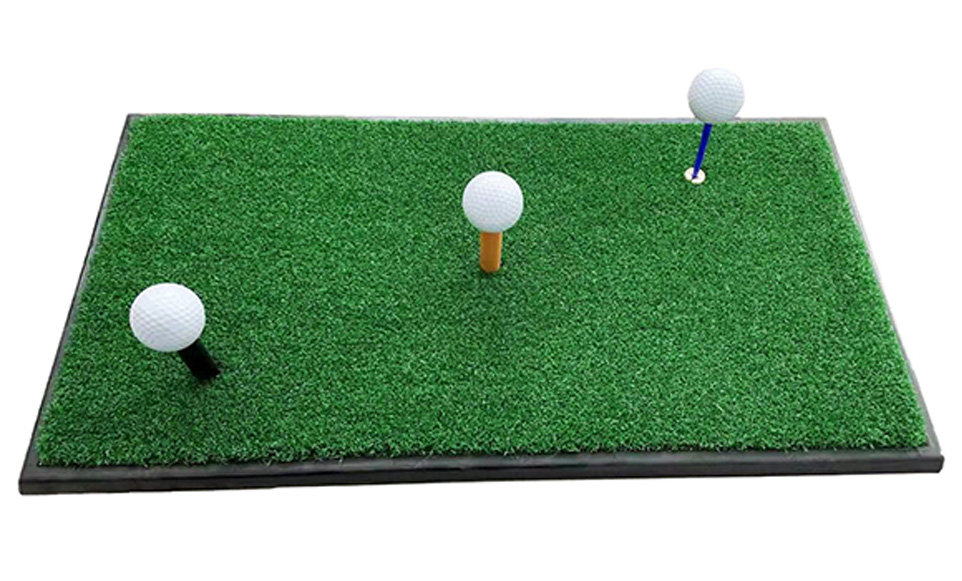
The operational logic and revenue streams separate US and South Korean golf driving ranges, which in turn shape their purchasing priorities for golf hitting mats.
In the United States, outdoor driving ranges dominate the mainstream operation model. Revenue mainly comes from bucketed range balls, walk-in guests, junior training camps and golf academy lessons. Many ranges combine outdoor practice with club fitting and food & beverage services. Operating hours follow daylight, though modern 24-hour unmanned indoor simulator facilities are rapidly growing. US operators prioritize total cost of ownership: they need golf mats with long service life, easy partial replacement and simple on-site maintenance to cut downtime amid high visitor throughput.
South Korea’s golf practice industry is built around membership-based indoor screen golf. Monthly subscription packages, hourly bay rentals and private swing lessons are the core income. Facilities are commonly 24-hour accessible, with high turnover of players in compact private booths. Korean operators focus on player experience consistency. Every swing must deliver predictable turf feedback; noise reduction is also critical for enclosed indoor rooms, to maintain comfort for users in adjacent booths.
Qingdao Yousen Fiber Technology supplies custom golf mat solutions to match these two business models. For US outdoor ranges and academies, our heavy-duty mats handle heavy all-day hitting volume. Sections can be replaced individually instead of full mat removal, greatly cutting maintenance labor and material costs. For Korean indoor screen golf studios, Yousen’s indoor-grade mats feature shock absorption and low noise, delivering uniform ball contact for swing analysis devices, which is vital for simulator training accuracy.
Whether US operators targeting casual walk-in golfers or Korean screen golf studios relying on recurring membership income, the hitting mat is a core asset affecting customer retention. Yousen works closely with global range owners to tailor mat specifications, including turf height, fiber density and base layers, to match local operation modes and maximize long-term return on investment.