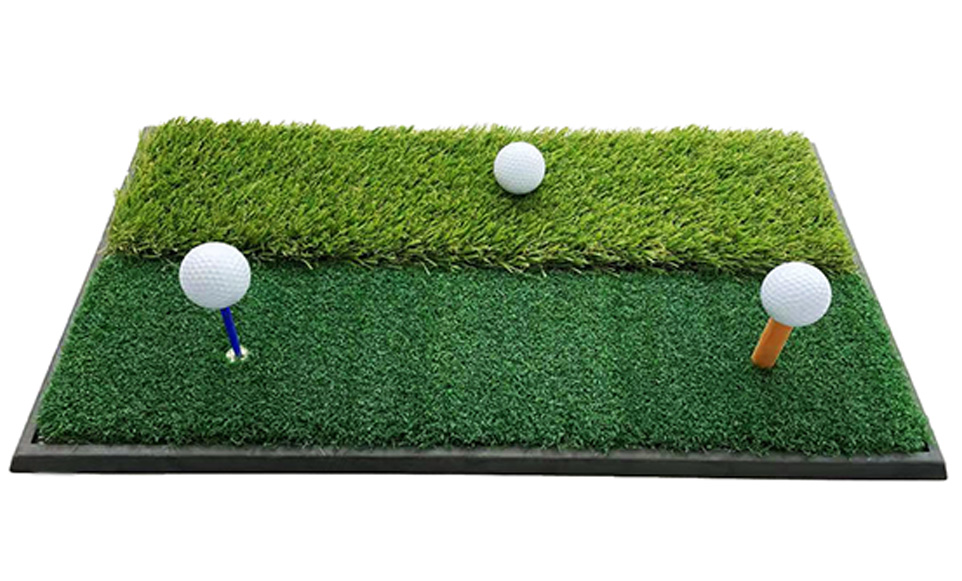
Land scarcity is the biggest constraint for golf practice facilities across Japan and South Korea. Unlike sprawling overseas ranges, most local driving ranges are multi-story, rooftop or narrow indoor-outdoor hybrid venues. Every square meter carries high rental costs, so operators prioritize high-density layout, high turnover and durable hitting surfaces that can withstand non-stop use.
Most Korean and Japanese ranges run extended opening hours, with heavy traffic after work and on weekends. Thin, low-quality mats quickly develop flattening, uneven spots and slippery surfaces, raising injury risks and triggering frequent replacement. Facility owners are looking for mats with consistent ball feedback, stable footing and compact installation, without requiring complicated ground foundation work.
Qingdao Yousen Fiber Technology designs commercial golf mats tailored for these space-limited Asian markets. Our premium golf practice mats feature reinforced fiber tufting that resists compression even under heavy daily hitting volume. The uniform surface keeps ball contact feedback consistent for amateurs and coaching academies. Many rooftop and multi-level ranges also value our lightweight modular design, which cuts transportation and installation costs and avoids extra structural load for buildings.
Another key requirement is noise control. Urban ranges in Japan and South Korea sit close to residential blocks. Yousen mats come with optional shock-absorbing backing that reduces impact noise and vibration, helping operators meet local noise regulations.
For contractors and golf club investors targeting East Asia, surface selection cannot follow standards from large open ranges. When space is expensive and foot traffic is intense, low-maintenance, space-efficient golf mats become a core competitive advantage for the whole facility. Yousen continues to customize mat sizes, densities and backing options to match compact driving range and indoor golf studio projects.